

casas de apostas em portugal — bônus e promoções imperdíveis em 2026
casas de apostas em portugal contextualiza o aumento da popularidade das apostas em direto, que em 2026 representa uma fatia considerável do volume total de jogo. A leitura rápida do desenrolar do evento, apoiada por dados atualizados de casas de apostas online em portugal, permite identificar oportunidades que apenas existem durante alguns minutos.
50 free spins 2026 — rodadas grátis sem depósito
Veja também:
- O Que É o casas de apostas online em portugal e Como Funciona?
- Por que usar casas de apostas com licença em portugal ao apostar?
- Bónus e Promoções nas casas de apostas em portugal
- Imagens de Apostas Desportivas
- casas de apostas com licença em portugal: Guia de Perguntas e Respostas Rápidas
- Onde Encontrar Apoio para Jogo Compulsivo em Portugal
O Que É o casas de apostas online em portugal e Como Funciona?
The concept of ‘guaranteed’ carries a weight that transcends its mere definition, embedding itself into the very fabric of human expectation, commerce, law, and psychology. At its core, a guarantee is a promise—a solemn vow that a specific outcome will occur, or that a particular condition will be met, often backed by a formal agreement or an implicit understanding. But the true nature of a guarantee is far more nuanced. It operates on multiple levels: it is a legal instrument, a marketing tool, a psychological anchor, and a philosophical paradox. When we say something is ‘guaranteed,’ we are not merely stating a fact; we are invoking a system of trust, accountability, and risk transfer. In the commercial world, guarantees are ubiquitous. From the lifetime warranty on a kitchen appliance to the money-back promise of an online retailer, these assurances are designed to reduce consumer anxiety, signal confidence in a product, and differentiate a brand in a crowded marketplace. The legal framework of a guarantee, however, is not as simple as it appears. It involves a complex web of terms, conditions, exclusions, and limitations, often buried in fine print. For instance, a ‘satisfaction guaranteed’ policy might require the customer to return the item within 30 days, in its original packaging, with a receipt, and might exclude shipping costs or restocking fees. The guarantee, therefore, is not a blanket promise but a conditional contract, carefully drafted to balance the interests of the buyer and the seller. On a psychological level, guarantees tap into our deep-seated desire for certainty in an uncertain world. They provide a cognitive shortcut, allowing us to make decisions with less deliberation because the risk of a bad outcome is ostensibly mitigated. This is why ‘guaranteed approval’ or ‘guaranteed results’ are such powerful phrases in advertising, even when the actual guarantee is thin or hedged with qualifiers. The placebo effect of a guarantee is real: a person who believes they are protected is more likely to be satisfied with a purchase, regardless of its objective quality. But the philosophic dimension of guarantees is perhaps the most intriguing. In life, almost nothing is truly guaranteed—death and taxes, as the saying goes, but even those can be evaded or deferred in certain circumstances. The very idea of a guarantee implies a level of control over future events that we rarely possess. It is an attempt to impose order on chaos, to create a small island of certainty in a sea of probability. This is why guarantees often fail: they are promises made by finite beings about an infinite and unpredictable universe. When a product breaks, when a service falls short, when a prediction proves false, the guarantee is exposed as a fragile construct, dependent on the goodwill, solvency, or competence of the guarantor. Consider the financial sector. A ‘guaranteed return’ on an investment, for example, is a legal fiction unless it is backed by a government or a highly capitalized institution. Even then, as history shows, guarantees can be broken—think of bank failures, sovereign defaults, or pension funds that renege on their obligations. The word ‘guaranteed’ in a financial prospectus is often a red flag, signaling that the issuer is trying to lure unsophisticated investors with a promise that cannot be kept. In contrast, a truly credible guarantee, such as a government-backed deposit insurance, is a social contract, a collective risk-sharing mechanism that works because it is universally enforced. The social dimension of guarantees is also critical. In interpersonal relationships, we often seek guarantees of loyalty, love, or honesty, but these are intangible and cannot be legally enforced. A promise to ‘always be there’ is a moral guarantee, not a contractual one, and its breach leads to emotional, not legal, remedies. The language of guarantees has evolved over time. In medieval times, a guarantee was often a physical object—a pledge, a hostage, or a piece of property handed over as security. Today, it is more likely to be a digital certificate, a terms-of-service agreement, or a blockchain-based smart contract. The technological revolution has introduced new forms of guarantees, such as escrow services, third-party certifications, and algorithmic assurances. Yet, the underlying principle remains the same: to transfer risk from one party to another, to build trust in the absence of direct knowledge, and to provide a mechanism for recourse when things go wrong. In the realm of quality control, a guarantee is a signal of a company’s internal standards. If a manufacturer offers a 10-year warranty on a product, it is implicitly stating that its design and production processes are robust enough to prevent failures within that period. This is why guarantees are often used as a competitive differentiator: a longer guarantee is seen as a proxy for higher quality. However, this logic can be inverted. Some companies offer generous guarantees precisely because they know that most consumers will never invoke them, due to inertia, forgetfulness, or the hassle of the claims process. The ‘guarantee’ then becomes a cost-effective marketing gimmick rather than a genuine commitment. The legal enforcement of guarantees varies widely across jurisdictions. In the European Union, consumer protection laws mandate a minimum two-year warranty on all goods, regardless of what the seller promises. In the United States, warranties are governed by the Magnuson-Moss Warranty Act, which requires that warranties be written in plain language and that any limitations be clearly stated. Yet, even with these protections, the burden of proof often falls on the consumer, who must navigate complex claim procedures, provide evidence of the defect, and sometimes engage in lengthy disputes. The paradox of the guarantee is that it is both a powerful tool for building trust and a potential source of betrayal. A guarantee that is honored creates loyalty and repeat business; a guarantee that is dishonored, or that is so riddled with exceptions that it is practically worthless, breeds cynicism and resentment. This is why the most successful companies treat guarantees not as a legal necessity but as a brand value.
Por que usar casas de apostas com licença em portugal ao apostar?
Comparar casas de apostas em portugal exige atenção aos tempos de saque e ao suporte ao cliente.
Bónus e Promoções nas casas de apostas em portugal
- 20 rodadas grátis sem depósito
- 200% até €750
- 50x aposta mínima
- 25x requisito de aposta
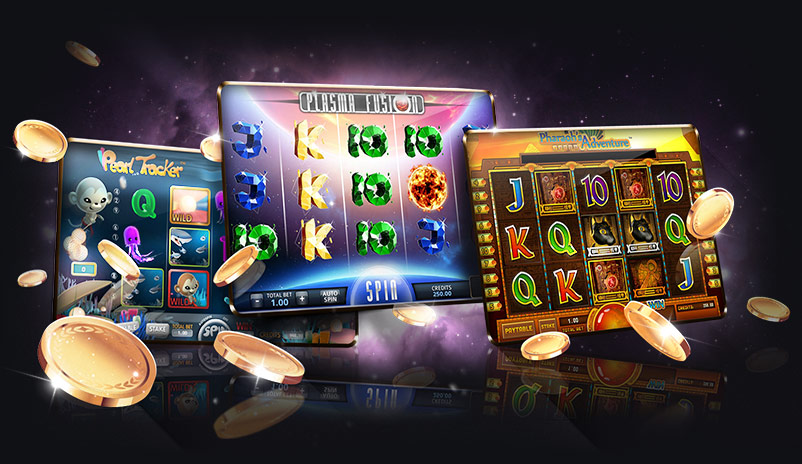
Imagens de Apostas Desportivas
casas de apostas com licença em portugal: Guia de Perguntas e Respostas Rápidas
O que são mercados de apostas desportivas?
Mercados de apostas são os diferentes tipos de resultados ou eventos sobre os quais pode apostar, como o vencedor de um jogo, o número total de golos, ou o resultado exato.
Quais são os formatos de odds mais comuns?
Os formatos mais comuns são o decimal (ex.: 2.00), o fracionário (ex.: 1/1) e o americano (ex.: +100). O decimal é o mais usado em Portugal.
O que é uma aposta ao vivo?
Uma aposta ao vivo é feita durante o decorrer do evento, com odds que mudam em tempo real com base no que está a acontecer no jogo.
O que é uma aposta múltipla (acumulador)?
Uma múltipla combina duas ou mais seleções numa só aposta. Para ganhar, todas as seleções têm de ser vencedoras, e as odds multiplicam-se, aumentando o potencial retorno.
Como gerir o meu bankroll de forma responsável?
Defina um orçamento fixo para apostas, nunca aposte dinheiro que não pode perder, e evite tentar recuperar perdas com apostas maiores. Use ferramentas de limitação de depósito sempre que disponíveis.
O que é o jogo responsável?
É um conjunto de práticas para garantir que o jogo é uma forma de entretenimento, não um problema. Inclui definir limites de tempo e dinheiro, e procurar ajuda se sentir que está a perder o controlo.
Especialistas em casas de apostas em portugal sugerem verificar a compatibilidade com dispositivos e sistemas operacionais.
Onde Encontrar Apoio para Jogo Compulsivo em Portugal
O jogo deve ser sempre uma forma de entretenimento e nunca uma forma de obter lucro. É exclusivo para maiores de 18 anos. Em Portugal, a atividade é regulada pelo Serviço de Regulação e Inspeção de Jogos (SRIJ), que também disponibiliza o mecanismo de autoexclusão, permitindo que os jogadores se protejam. Se sentir que o jogo está a afetar a sua vida, contacte o Jogo Responsável (SRIJ) para obter apoio. Defina limites de tempo e de depósito, jogue apenas com valores que possa perder e nunca tente recuperar perdas. O jogo responsável é a chave para uma experiência saudável.